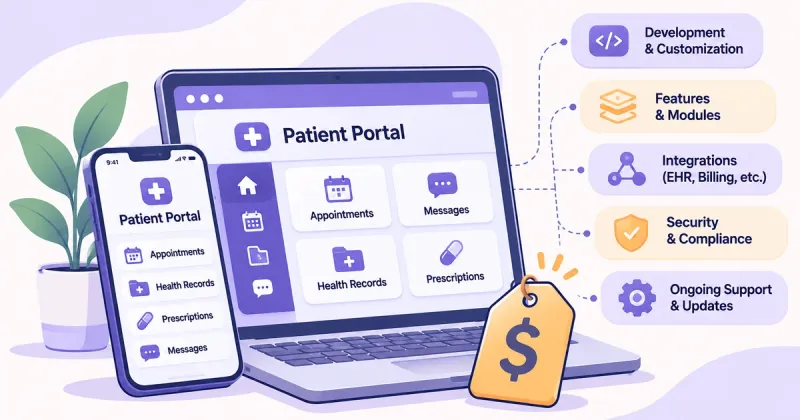

Choosing between a white label vs custom telehealth platform comes down to one trade-off. White-label gets you to market faster with less upfront effort, because the core product already exists. A custom build takes more planning and investment, but you control every workflow and own what you build.
There is also a third route: launch on a white-label base and add custom features as you grow. This guide compares all three, lists the signs that you've outgrown white-label, explains who carries compliance responsibility in each model and ends with six questions to answer before you talk to a vendor.
White label vs custom telehealth platform: the quick answer
Choose white-label when speed matters most and your care model fits a standard virtual visit flow. Choose custom when your workflows, integrations or product roadmap are what set you apart. In short, white label telemedicine vs custom development is a trade between speed and control.
| Factor | White-label platform | Custom platform |
|---|---|---|
| Time to market | Faster: the core product is already built | Slower: discovery, design and build come first |
| Branding | Your logo, colors and domain on the vendor's design | Any look and patient experience you want |
| Workflow control | Configure within the vendor's options | Built around your care model |
| Code and data ownership | Defined in the vendor agreement; check code ownership and data export terms | Source code can be yours under a custom development contract; confirm it in writing |
| Compliance responsibility | Shared: the vendor runs hosting and core security | You and your development partner decide and own the controls |
| Cost structure | Lower upfront; ongoing subscription or license fees | Higher upfront build cost; then hosting and support |
| Scalability | Grows within the vendor's limits and pricing tiers | Scales with your architecture and roadmap |

What a white label telehealth platform gives you
A white-label platform is a finished telehealth product you launch under your own brand. You typically get a patient app or web portal, a provider app for video visits and async visits, and an admin panel for scheduling, payments and patient records.
Here are the white label telehealth platform pros and cons:
- Faster time to market, because the core product is already built and tested
- Lower starting effort and a predictable subscription
- Vendor support, security updates and new features included in the service
- Limited customization: you can change what the vendor allows, and no more
- Fixed workflows that follow the product's design rather than your care model
- Vendor lock-in risk: data export, integrations and pricing depend on the vendor
Telehealth SaaS vs white label is a related choice. A SaaS tool runs under the vendor's brand, usually priced per provider. A white-label platform carries your brand and works more like your own product.
When you see a white-label demo, check how the patient booking and visit flow works on a phone, what the admin panel lets you change without the vendor, which EHR and payment integrations exist today, and how support requests are handled. Ask to see a data export, not just hear that one exists.
Our white label telehealth platform comes from the same team behind our own telehealth products. It is built on production software, with components that have handled real patients and providers. We'll give you a timeline once we've scoped your build.
What a custom telehealth platform gives you
Custom telehealth platform development starts from your care model rather than a product's defaults. Discovery maps how patients enter care, how clinicians review cases and how billing works, and the platform, from the patient app to the provider dashboard, is built around those steps.
- Workflows for your specialty, such as async visits for dermatology or subscription billing for ongoing care programs
- Integrations planned from the start: EHR, e-prescribing, labs, payments and CRM
- Ownership of the source code and a product roadmap you control
- Scalability that follows your architecture rather than a vendor's pricing tiers
- More planning and a larger upfront investment, with a later launch than white-label
- Ongoing responsibility for hosting, security updates and support, directly or through your development partner
A custom build usually moves through discovery, UX design, a first release (MVP), then further releases on a roadmap you set. Each stage gives you a decision point, so you can adjust scope as you learn from patients and clinicians.
A custom telehealth platform makes the most sense when the software itself is part of what you offer patients or partners. Our telehealth software development work covers video, async and AI-assisted care built around your model.
The middle route: start white-label, customize as you grow
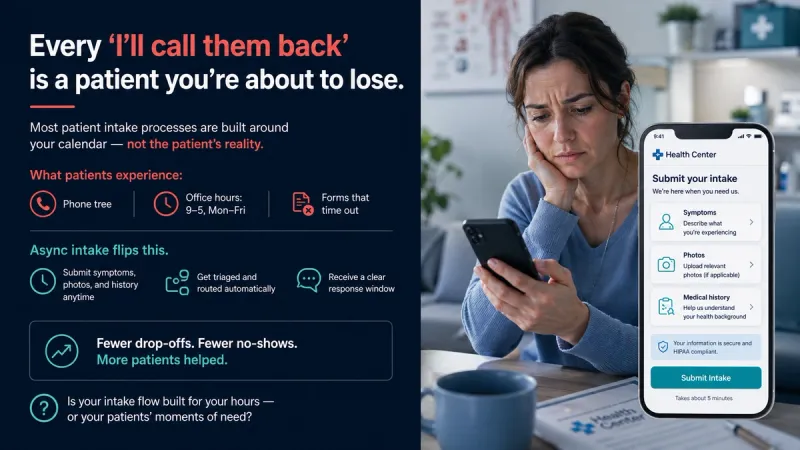
The choice is not always one or the other. In a hybrid approach, you launch on a branded white-label base, then add custom workflows, integrations or AI features, such as AI patient intake, where your model needs them.
This route makes sense when:
- You need to launch soon to test demand, but already know some workflows will need custom work
- Your first release, or MVP, can run on standard video and async visits
- The vendor supports custom modules, API access or extensions
- You want to spread the investment over time instead of paying for a full build upfront

Ask any vendor how extensions work before you sign. If custom features cannot be added on top of the platform, the hybrid route turns into a migration later.
Signs you've outgrown a white-label platform
White-label works well until your model moves beyond what the product was designed for. Watch for these signs:
- Workflow workarounds. Staff keep spreadsheets or side tools to cover steps the platform cannot handle.
- Integration limits. You need an EHR, lab or pharmacy connection the vendor does not support.
- Branding limits. Your patient experience looks like every other brand on the same platform.
- Data export problems. Getting your own patient data out is slow, partial or expensive.
- Rising per-seat costs. Fees that grow with each provider or visit approach what a custom platform would cost to run.
- Roadmap mismatch. The features you need are not on the vendor's plan.
Two or more of these signs are a good reason to plan a migration or a custom build. Start with your data: confirm what you can export and in what format, so patient records move cleanly.
A planned migration then follows four steps:
- Export and map your data, including patient records, provider accounts and payment history
- Rebuild or reconnect integrations on the new platform
- Run both platforms in parallel while you test the new one with a small group
- Move patients and providers over with clear communication and support
Compliance: who is responsible for what
Compliance responsibility is shared in both models, but the split is different. With a white-label platform, the vendor runs the hosting and core security, and you are responsible for how your team uses the platform. With a custom build, you and your development partner decide on and own every control.
In either case, confirm these points in writing:
- Whether the vendor or host signs a business associate agreement (BAA) with you
- Where data is hosted and who can access it
- Role-based access controls for staff and clinicians
- Audit logs of who viewed or changed patient records
- How security updates and incident response are handled
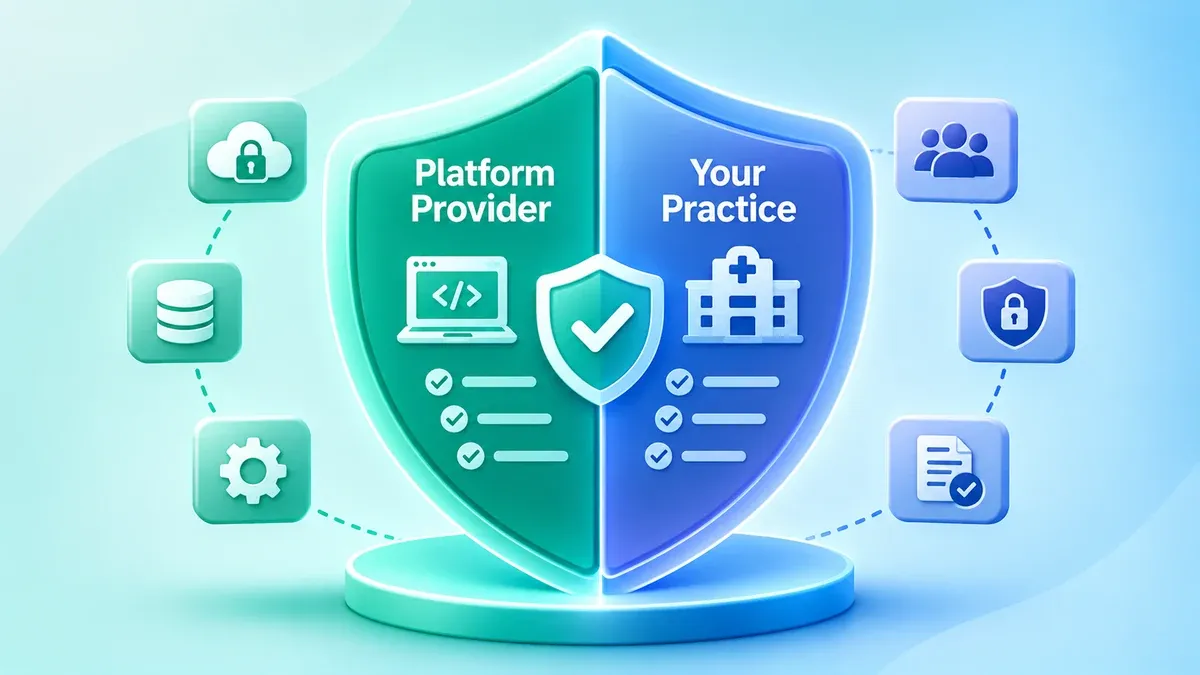
With a custom build, agree early which controls your development partner sets up and which your own team runs after launch, such as user access reviews, security monitoring and responding to incidents. Write the split into your support agreement so nothing falls between the two.
The HIPAA Security Rule sets out the administrative, physical and technical safeguards for electronic protected health information. When we build a platform for HIPAA-covered providers, we make it HIPAA-aligned from the start and write the shared-responsibility split into the project scope.
How to decide: 6 questions to answer first
The build vs buy telehealth platform decision gets clearer once you answer these six questions:
- What is your care model? Standard video visits fit white-label well. Async-first, specialty or program-based care may need custom workflows.
- How much launch pressure do you have? If you need to start seeing patients soon, white-label or the hybrid route gets you there faster.
- How do you want to pay? White-label spreads cost over a subscription; custom puts more upfront and lowers recurring fees. Compare total cost of ownership over the same period, and weigh license vs build cost, not just the first invoice.
- Which integrations are non-negotiable? List every EHR, e-prescribing, lab and payment connection, then check each vendor's support for them.
- How much ownership do you need? If investors or partners expect you to own the technology, source code and data ownership matter.
- Where will you be in three years? Your roadmap, states, services and patient volume should fit the route you choose.
Whichever route you take, you bring your clinicians; the platform supports them.
Compare both routes for your care model
The right answer in white label vs custom telehealth depends on your care model, launch pressure, budget and how much you need to own. If telehealth is one part of a wider build, see our custom telehealth software solutions for the full range of services.
Not sure which route fits? Our engineers will compare both options for your care model with you. Book a call